Highlights:
– China and the U.S. exhibit diverging approaches towards trade and tariffs in their economic dialogues.
– The APEC meeting in Suzhou underscored the significance of building free trade agreements amid global economic uncertainties.
– The tech competition between the U.S. and China is expanding into the realm of digital trade and artificial intelligence.
Contrasting Messages from Two Global Giants
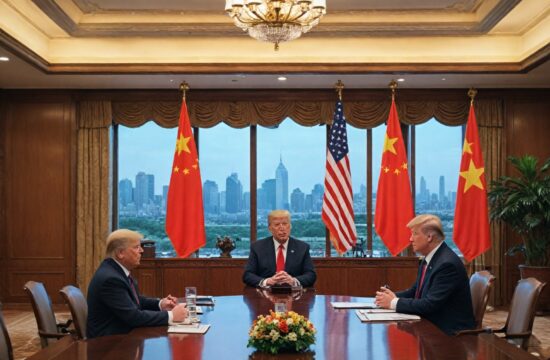
In the aftermath of a significant meeting between U.S. President Donald Trump and Chinese President Xi Jinping, divergent messages are emerging from the world’s two largest economies concerning their priorities for trade and regional cooperation in Asia. During a recent press conference in Suzhou, China, Commerce Minister Wang Wentao highlighted China’s commitment to sustaining lower tariffs for extended periods, a clear indication of China’s strategy to bolster its export-driven economy. With exports constituting approximately 28% of global goods production, the significance of these tariffs cannot be understated.
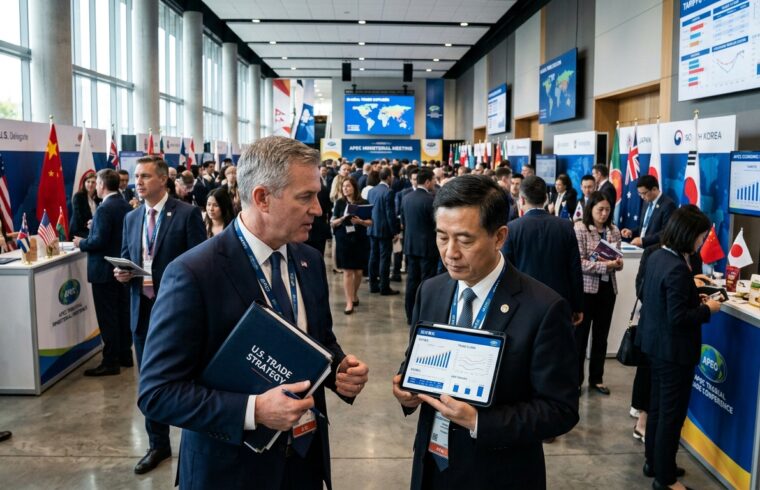
The U.S., however, appears to have a different focus. While the administration has been vocal about promoting balanced trade, it refrained from emphasizing tariffs. This distinction was evident during the trade ministers’ meeting at APEC, where emphasis was placed on regional free trade agreements. Such contrasting approaches highlight potential tensions in economic relations and the larger implications for global markets.
Navigating Future Collaborations
As both China and the U.S. set their sights on future collaborations, discussions surrounding “constructive strategic stability” have surfaced. During the APEC meetings, crucial business agreements were discussed, including China’s planned purchase of 200 Boeing aircraft and a commitment to importing $17 billion worth of U.S. agricultural products annually until 2028. These agreements signify a willingness to engage despite lingering disparities in trade policies.
Yet, clarity on how both countries will implement these agreements remains elusive. Following Wang’s discussions with U.S. Delegation head Rick Switzer, it was evident that while both nations are eager for fruitful economic outcomes, significant differences still need to be addressed. This ambiguity leaves room for speculation about the future trajectory of U.S.-China relations.
Competition in the Digital Realm
The scope of competition between the U.S. and China is not confined to tariffs and traditional trade policies; it now spans the burgeoning field of digital trade. The recent APEC meeting produced a consensus to enhance digital trade cooperation, underscoring the growing importance of technology in economic strategy. With plans to facilitate e-commerce operations and address the digital divide, both nations are preparing to position themselves as leaders in this critical area.
Although the U.S. has implemented restrictions on Chinese access to advanced AI technology, Chinese companies continue to innovate, offering affordable AI models that are quickly narrowing the competitive gap. Both U.S. and Chinese officials recognize the urgency of maintaining leadership in the tech sector, with U.S. tech firms scheduled to hold influential workshops at an upcoming APEC digital event in Chengdu. Such initiatives reflect the ongoing ambition of both nations to dominate the digital landscape.
Conclusion:
As the U.S. and China navigate their complex economic relationship, the recent APEC trade ministers’ meeting reveals ongoing tensions and opportunities for cooperation. With a focus on tariffs, strategic agreements, and the digital landscape, both nations are at a pivotal juncture. How will these countries reconcile their differences in trade priorities? What will be the broader implications for global trade if these disparities remain unresolved?
Editorial content by Avery Johnson