Highlights:
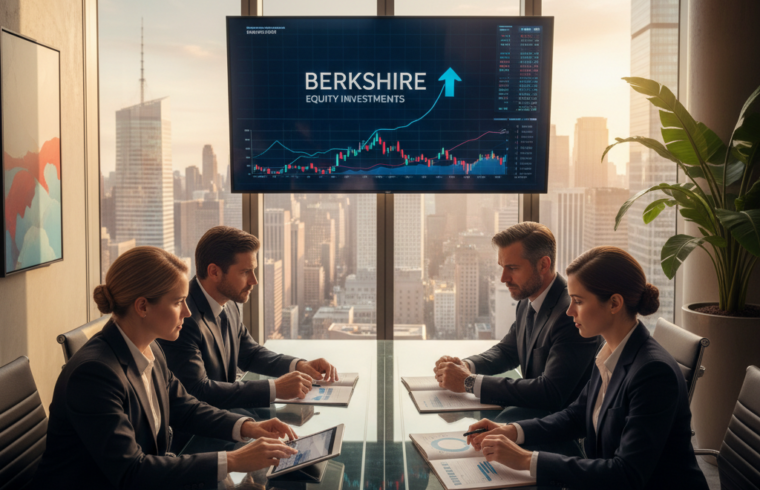
- The future of Berkshire Hathaway’s $300 billion equity portfolio hangs in the balance as Warren Buffett retires.
- New CEO Greg Abel faces skepticism regarding his ability to maintain the company’s investment strategy without Buffett’s leadership.
- Potential shifts toward passive investment strategies may redefine how Berkshire approaches its equity holdings moving forward.
Warren Buffett’s Departure: A New Era for Berkshire Hathaway
As Warren Buffett officially steps back from his role at Berkshire Hathaway, the financial world is abuzz with speculation about the ramifications for the company’s massive $300 billion equity portfolio. Buffett’s tenure was characterized by strategic stock selections that showcased his long-term vision and adeptness in navigating volatile markets. His retirement not only marks a significant cultural shift within the company but also raises crucial questions about who will steer Berkshire’s future investment strategies. The shadows of uncertainty loom large, particularly with no clear successor possessing Buffett’s investment acumen.
The stakes are high. It is not just about preserving the integrity of Berkshire’s investments; it’s about continuing a legacy that has elevated the company to legendary status in the business sphere. The equity portfolio, often seen as a reflection of Buffett’s wisdom, has drawn concerns from analysts and investors alike regarding how it will be managed moving forward. The absence of a figure like Buffett adds another layer of complexity to Berkshire’s succession strategy.
The Role of New Leadership and Investment Management Changes
With Greg Abel now at the helm of the company, he faces the daunting challenge of making capital allocation decisions, particularly regarding the equity portfolio. While he is respected among long-time employees and has a solid background in operational management, Abel lacks a proven track record in active stock selection. As share prices fluctuate, some shareholders are anxious about whether he can effectively manage one of the world’s most concentrated equity portfolios without the guiding hand of Buffett’s seasoned judgment.
The landscape further shifts with the departure of Todd Combs, one of the two investment managers once considered Buffett’s potential successors. This leaves Ted Weschler as the remaining steward for an increasingly pressured portfolio, prompting analysts to speculate about future hires to alleviate the burden on Abel and Weschler. Questions loom: Will additional managers come on board to distribute responsibility, and will Abel himself take an active role in stock picking?
The Future: Passive Strategies and Broad Market Indexes?
As Berkshire Hathaway embarks on this new chapter, the notion of passive investment strategies is gaining traction among analysts. With Berkshire’s large-scale equity holdings, many suggest that shifting towards broad market indices may provide more stability and lessen the challenges associated with outperforming the market. According to Meyer Shields from Keefe, Bruyette & Woods, Berkshire could benefit from aligning its investments with overarching market trends, mitigating the risk associated with actively managed positions that have defined the portfolio traditionally.
As opinions on the stock portfolio’s future diverge, some analysts predict a steady transition rather than a radical overhaul. Deiya Pernas, an analyst at Pernas Research, anticipates a slow winding down of active management, suggesting that over the next decade, the public may witness equities diminishing as a core element of Berkshire’s identity. This gradual shift could redefine the loyalty and expectations of Berkshire’s vast shareholder base.
In summary, Warren Buffett’s retirement presents a turning point for Berkshire Hathaway, particularly regarding its enormous equity portfolio. With uncertain leadership in the active investment space and pressures from shareholders, the company may consider adopting broader market-based strategies. As this narrative unfolds, key questions remain: How will Abel navigate the changing landscape? Will Berkshire continue to prioritize stock picking or move towards index-based investments? And what does the future hold for one of the most powerful equity portfolios in existence?
Editorial content by Skyler Thompson