Pedestrians pass an Apple Inc. store in the Wangfujing shopping area in Beijing, China, on Friday, Feb. 10, 2023. China’s consumer inflation accelerated last month as the country reopened and the Lunar New Year holiday spurred demand, although gains remain muted enough for the central bank to keep easing monetary policy to support the economy’s recovery. Source: Bloomberg
Bloomberg | Bloomberg | Getty Images
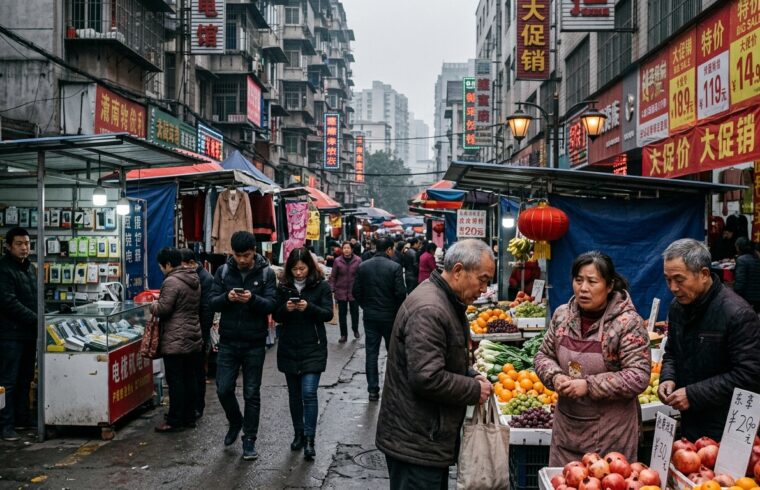
The state of China’s economy continues to be a focal point for global observers, particularly as new data reveals a pressing investment slump coupled with stagnant retail sales growth. As the world’s second-largest economy, the performance of China has significant implications not just for the region but for global economic stability. The most recent figures indicate that while industrial output is on the rise, retail sales growth is lagging behind expectations, highlighting a potential imbalance in demand and supply that could hinder broader recovery efforts.
In August, the National Bureau of Statistics reported a mere 0.4% rise in retail sales year-over-year, down from 0.6% the previous month, and below predictions of a 0.8% increase. Conversely, industrial output surprisingly exceeded forecasts, growing by 5.2% from the prior year. Understanding these dynamics is essential, as it reflects both consumer sentiment and the structural issues plaguing the Chinese economy as authorities attempt to stimulate growth.
Economic Pressures and Policy Responses
Recent statistics reveal increasing pressures within the Chinese economy, including an uptick in the urban unemployment rate to 5.3% in August. This modest rise reflects seasonal effects, according to NBS spokesperson Fu Linghui, but it underscores broader weaknesses exacerbated by external factors. The statistics bureau noted a significant supply-demand imbalance, where businesses are grappling with operational challenges while the demand remains subdued, prompting calls for more decisive macroeconomic policy adjustments.
While growth figures fell to their lowest in over three years, policymakers have adopted a cautious approach, favoring incremental measures instead of more aggressive economic stimulus. For instance, there have been notable efforts to boost government bond issuance and offer loan-interest subsidies targeting small enterprises, although the impact on credit expansion has been less than anticipated. In August, new bank loans registered only 60 billion yuan, starkly missing the 400 billion yuan forecast, highlighting the urgent need for robust consumer confidence and economic revitalization.
Long-Term Implications and Future Directions
The economic backdrop poses a complex puzzle for China’s leadership, particularly as it navigates the crescent waves of global demand and seeks to instill confidence among its populace and businesses. Analysts predict that a recovery in consumer demand and residential investment is crucial, as these elements are vital to achieving the anticipated growth range of 4.5% to 5%. Despite some bright spots in exports and technological manufacturing, the fragility of domestic consumption remains a significant concern.
Looking ahead, there appears to be a critical window of opportunity in September for the government to implement further fiscal measures, especially with the upcoming Golden Week holidays. Economists argue that more robust support is required, and though a major policy rate cut seems unlikely, a continued emphasis on enhancing business confidence will be paramount to reversing the current economic malaise. The interplay between domestic challenges and global economic conditions will influence China’s trajectory in the months to come.
Concluding, China’s economic landscape is marked by a duality of growth in industrial output against a backdrop of muted retail sales and rising unemployment. As the nation grapples with these challenges, proactive fiscal and monetary strategies are essential to reviving consumer confidence and sustaining economic momentum. How might future economic policies address the growing imbalance between supply and demand? What role do external economic factors play in shaping China’s recovery trajectory? And how can businesses adapt in this fluctuating economic environment?
Editorial content by Taylor Rodriguez