A Chinese flag flutters on top of the Great Hall of the People ahead of the opening ceremony of the Belt and Road Forum (BRF), to mark the 10th anniversary of the Belt and Road Initiative, in Beijing, China October 18, 2023.
Edgar Su | Reuters
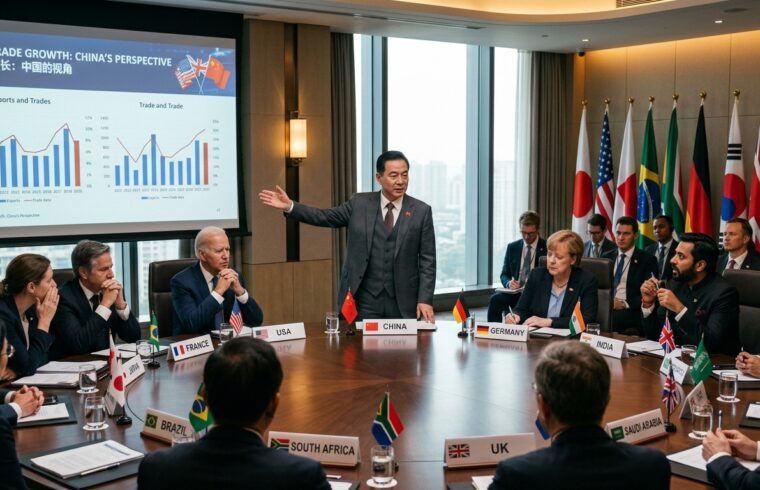
BEIJING — China has recently taken a stand against what it perceives as rising protectionism among G20 nations, which have voiced concerns regarding economies dependent on exports. This defensive posture from Beijing comes in the wake of statements made by U.S. Treasury Secretary Scott Bessent, who noted that 19 G20 members agreed on the need to address an “unsustainable equilibrium” linked to a surge of inexpensive exports.
As the sole dissenting voice in a joint statement highlighting trade imbalances, China’s Commerce Ministry responded by characterizing these criticisms as unfounded excuses to hinder its economic growth. Ling Huang, a spokesperson for the ministry, emphasized that labeling China’s economic practices as disruptive only serves to aggravate global trade tensions and compromise the overall health of the world economy.
Core Issues and Diverging Views
In a vigorous defense of its economic strategies, China maintains that the critiques from the U.S. and Europe are attempts to unjustly pressure its growing economy. Huang articulated that characterizing China’s export-oriented growth as a driver of global economic instability is not only misleading but also an example of a broader trend towards protectionist policies among G20 countries. She warned that such assertions could exacerbate the fragile state of international trade.
Her remarks come at a time of heightened diplomatic engagement, including an approaching visit from President Xi Jinping to Washington, D.C. Huang also condemned the recent U.S. sanctions on Iranian entities, which potentially affect Chinese businesses, reiterating Beijing’s call for Washington to retract what it sees as unwarranted punitive measures. Meanwhile, China’s stance highlights an ongoing struggle between trade liberalization and rising economic nationalism internationally.
Implications for Global Trade Relations
The contention between China and the G20 nations carries significant implications for future trade relations. China has urged France to reconsider a new law targeting low-priced imports from Chinese e-commerce companies, suggesting that backlash against such legislation could lead to retaliatory actions, which would further complicate the already nuanced trade narrative between these entities. Huang has asserted that any unilateral demands undermine the prospects of constructive negotiation.
Additionally, ongoing trade discussions between China and the European Union signal a cautious approach by European powers to address the hefty trade deficit they face with China. EU Trade Commissioner Maroš Šefčovič has warned of potential “harsher measures” should China fail to deliver tangible results by an impending deadline. This looming ultimatum illustrates the intricate dance of diplomacy and trade dynamics, as both parties navigate the treacherous landscape of international relations in the attempt to establish more balanced economic practices.
Highlights
– China expresses strong opposition to G20 nations’ criticisms, citing protectionist motivations.
– U.S. Treasury Secretary Scott Bessent discusses the need for addressing unsustainable export dynamics.
– Ongoing trade dialogues signal both risks and potential pathways toward economic collaboration.
In summary, China’s recent remarks at the G20 reveal its sensitivity to criticisms regarding its export-driven economy, framing them as acts of protectionism from partner nations. The tension underscores the growing complexities of international trade dynamics, as countries navigate the fine line between free trade and safeguarding domestic interests. What might the future hold for global trade relationships in light of these developments? How can nations strive for collaboration while respecting their economic sovereignty? What solutions can be proposed to mitigate the perceived trade imbalances?
Editorial content by Avery Johnson