The U.S. and Chinese flags are seen on the day of a bilateral meeting between the U.S. and China, in Geneva, Switzerland, May 10, 2025.
Keystone/eda/martial Trezzini | Via Reuters
Highlights
- China announces its commitment to share AI technology globally while criticizing exclusive approaches.
- The U.S. is tightening restrictions on access to leading AI models amidst rising concerns about security and trade.
- Both nations are discussing collaboration on AI governance, albeit with starkly different methodologies.
Global AI Collaboration: Diverging Paths
In a notable move, senior Chinese officials have reiterated their commitment to global artificial intelligence (AI) cooperation. At a recent press conference, Wang Yi, China’s top diplomat, articulated an optimistic vision for AI that prioritizes human benefit and invites international participation in China’s proposed global AI cooperation organization. This statement comes during a critical juncture where technological advancements are high on the global agenda, and the international community is evaluating the ethical implications of AI deployment.
Wang’s announcement aligns with the release of a comprehensive governance whitepaper that critiques current global trade tensions while underscoring support for the Global South—typically referring to less-developed nations. This strategic positioning reflects China’s ambition to redefine its role in the tech world, emphasizing collaboration over competition, especially with respect to nations often sidelined in global discussions.
Contrasting Approaches to AI Development
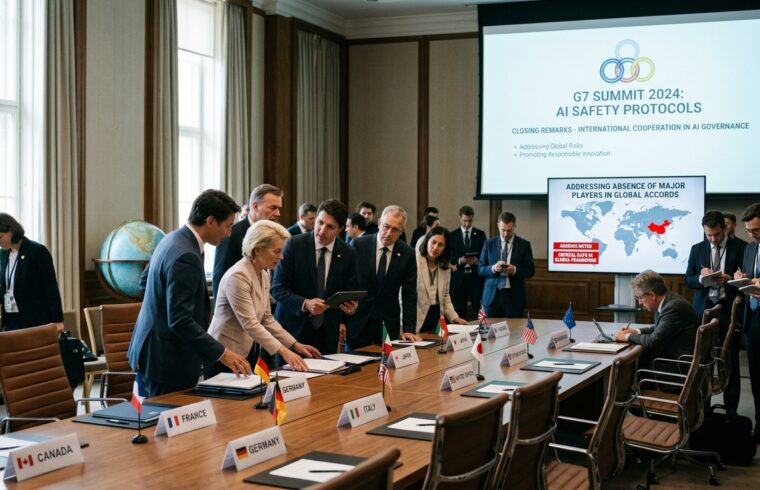
Amidst China’s outreach for AI collaboration, the U.S. is taking a contrasting, more protectionist stance. Recent reports indicate that the Group of Seven (G7) nations, including the U.S., are deliberating a framework to grant “trusted partners” limited access to cutting-edge American AI technologies. Such measures stem from heightened concerns over security and the potential misuse of advanced AI capabilities. As the U.S. continues to guard its technological assets, it remains to be seen how this protectionism will affect international partnerships.
Moreover, the distinction between U.S. and Chinese AI models highlights the persistent divide: While U.S. offerings often necessitate subscriptions and are designed for a market-based approach, China is promoting free or low-cost AI solutions that can be easily accessed and deployed by a broader range of users. This readiness to offer affordable technology is reflective of China’s broader strategy to position itself as a global leader in AI, particularly for developing economies.
Future Implications for Global AI Governance
The implications of these competing AI strategies raise essential questions about the future of international collaboration. As both nations agree to work on establishing AI guardrails, the details of such cooperation remain sparse, leaving a cloud of uncertainty in their wake. The dynamics between China’s push for accessibility and the U.S.’s focus on control exemplify how technology is becoming a battleground for international relations.
Looking forward, how these two major players will navigate their ideological differences while addressing global concerns such as ethics in AI deployment, privacy, and security will be crucial. With initiatives like China’s “AI Capacity Building for All” and U.S. calls for carefully monitored AI development, both countries are at a crossroad of defining not just their own technological futures, but the structure of global AI governance.
Conclusion
In summary, as the U.S. and China take distinct paths concerning AI technology, the global landscape of cooperation and competition in this field continues to evolve. With contrasting approaches—China focusing on broad accessibility and the U.S. on restrictive measures—the outcome will not only influence the two nations but also set precedents for international norms in technology governance. How will these dynamics shape the future of technological collaboration? Can both nations find a mutual ground for cooperation? What role will emerging economies play as they navigate their own AI landscapes?
Editorial content by Taylor Rodriguez