
Highlights
- Foreign automakers recognize the need to innovate with advanced technology to regain market share in China’s automotive industry.
- The introduction of new models equipped with driver-assist technology signifies a shift in strategy for traditional manufacturers like Hyundai and Cadillac.
- As sales continue to decline, foreign carmakers are looking to leverage Chinese technology to enhance global offerings.
Foreign Automakers in the Chinese Market
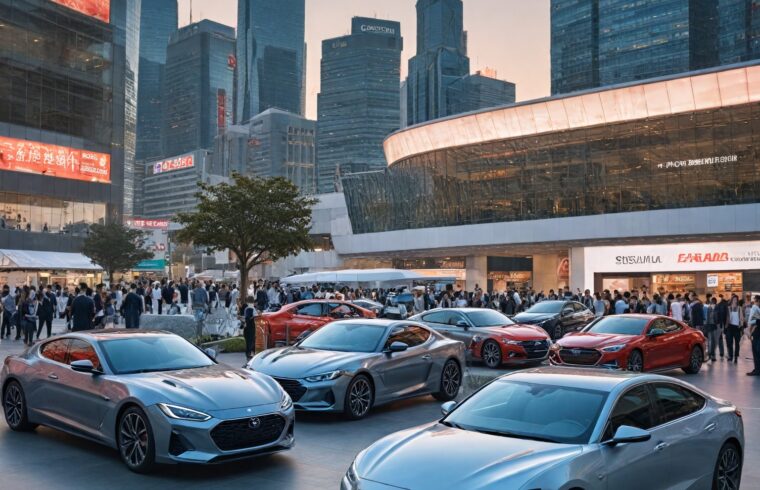
As the world’s largest automotive market, China has long been a playground for foreign car manufacturers. However, recent trends indicate that sales are on a downward trajectory, intensifying competition among local and international brands. In response to this slump, U.S., Korean, and German automakers are making strategic adjustments, unveiling a host of innovative models during the Beijing auto show.
Companies like Cadillac are propelling themselves forward with technology, hoping to reclaim their standing in one of the most lucrative automotive markets worldwide. The automaker has announced its first electric SUV tailored specifically for Chinese consumers, highlighting the rising importance of localizing products to meet the demands of this unique market.
Embracing Technology and Local Expertise
At the forefront of this industry shift is Cadillac’s new VISTIQ model, which incorporates state-of-the-art driver-assist technologies co-developed with the local startup Momenta. Priced between 468,000 yuan ($68,000) and 508,800 yuan, the vehicle aims to offer capabilities for both city driving and highway cruising, along with features like automatic parking. Cadillac’s local sourcing strategy promises reduced production times, making it a formidable competitor against domestic brands.
Hyundai is also ambitious, launching its IONIQ brand specifically for the Chinese market and focusing on reestablishing its footprint after a significant decline in sales. Its efforts include innovative technology such as advanced driver-assist features, powered by collaboration with Qualcomm. Hyundai’s pivot illustrates a larger trend among foreign automakers recognizing the need to adapt strategies to fit local preferences, as they strive for relevance in a market that has rapidly evolved.
Implications for the Global Automotive Landscape
The implications of this aggressive technology integration and strategy shift are substantial. According to industry experts, the technologies developed in China are not just positioned for local consumption; they hold the potential to influence global automotive technology as well. Stephen Dyer from AlixPartners notes that while foreign brands may struggle to regain significant market share, the knowledge and innovations they acquire can be disseminated globally.
Your average consumer in China is benefiting from an increasingly diverse array of choices that come with rapid innovation cycles. As automakers like Volkswagen, Nissan, and others roll out advanced features to keep up with evolving consumer expectations, the landscape of the global automotive sector may soon be reshaped dramatically. This presents an exciting opportunity for local technology to set the pace for developments in other markets.
— CNBC’s Matthew Chin contributed to this report
In conclusion, the shift of foreign manufacturers to embrace Chinese tech and market demands could redefine their strategies. As global automotive dynamics continue to evolve, what long-term impacts will these changes have on consumer preferences and technological advancements worldwide? How will these trends influence the competitive landscape among foreign and domestic automakers in the future?
Editorial content by Avery Johnson