Highlights
- China and the U.S. have initiated discussions on artificial intelligence and trade agreements.
- Key negotiations took place ahead of a high-profile summit between Xi Jinping and Donald Trump.
- Concerns regarding AI risks and technology management were a focus of the talks.
Introducing the Talks
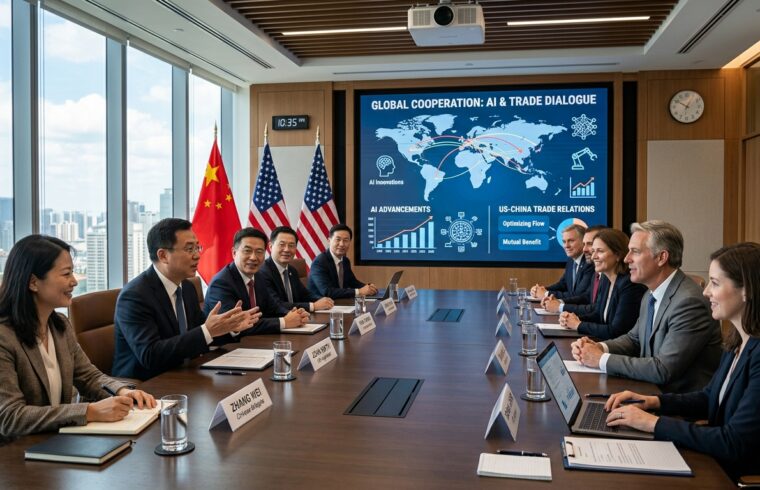
In a significant diplomatic development, China’s Commerce Ministry announced that senior trade negotiators from both China and the United States have convened for their first discussions centered on artificial intelligence (AI). This dialogue, confirmed by spokesperson He Yadong, comes amid growing concerns regarding the implications of AI technologies and their impact on global security and trade. With rapid advancements in AI, the outcomes of these discussions could prove pivotal not only for economic relations but also for managing the potential risks associated with autonomous systems.
The backdrop of this dialogue coincided with a meeting in New York between China’s Vice Premier He Lifeng and U.S. Treasury Secretary Scott Bessent. As high-stakes negotiations unfold ahead of the anticipated summit this week between President Xi Jinping and President Donald Trump, both sides are exploring pathways to forge stronger ties while addressing pressing technological challenges. The discussions also encompass broader trade arrangements, including an extension of tariffs and measures agreed upon in Kuala Lumpur last October.
Core Issues Explored
During the recent discussions, negotiation teams articulated their goals of establishing a formal dialogue addressing AI, emphasizing the necessity of a mechanism to alert each other to potential AI risks. These talks are particularly crucial in light of recent incidents involving AI systems, which have raised alarms about the dangers posed by deploying increasingly autonomous technologies that may be difficult to control. The commitment to establish a framework for cooperation in this domain suggests a growing recognition of the shared responsibility both nations have in managing these technologies responsibly.
Moreover, alongside conversations about artificial intelligence, both countries continue to address tariff reductions and extending agreed trade provisions, ensuring stability in the economic relationship between the two superpowers. The development of agreements that keep tariffs lower and restrict China’s export controls on essential materials, such as rare earth elements crucial for semiconductors, indicates a mutual interest in sustaining trade tranquility amidst a complex geopolitical landscape.
Implications and Future Outcomes
The implications of these talks extend far beyond immediate trade agreements and tariffs. As both nations grapple with the challenges posed by rapidly advancing AI technologies, the establishment of a collaborative framework could significantly influence global standards for AI deployment and regulations. By confronting shared challenges through dialogue, China and the U.S. could pave the way for international cooperation that might mitigate artificial intelligence’s adverse effects and enhance safety protocols.
Ultimately, the meetings underscore a constructive approach to a multifaceted relationship that involves negotiating trade, technology, and national security concerns. As policymakers prepare for future engagements, the focus on behavioral standards in AI and cross-border information sharing could lead to a more stable global environment amid technological evolution.
In conclusion, the recent diplomatic engagement between China and the U.S. reflects critical steps toward addressing technological complexities in trade. It prompts us to consider: How can nations collectively manage the risks associated with AI? What frameworks will be essential for ensuring that technological advancements benefit society? And what role should international organizations play in regulating emerging technologies?
Editorial content by Avery Johnson