Highlights:
– U.S. and China prepare for a pivotal summit in Beijing aimed at strengthening East Asia ties.
– Key trade talks are scheduled in South Korea before President Trump’s meeting with President Xi Jinping.
– China and the U.S. are navigating complex geopolitical tensions, including the Iran situation and Taiwan relations.
Setting the Stage for a Crucial Summit
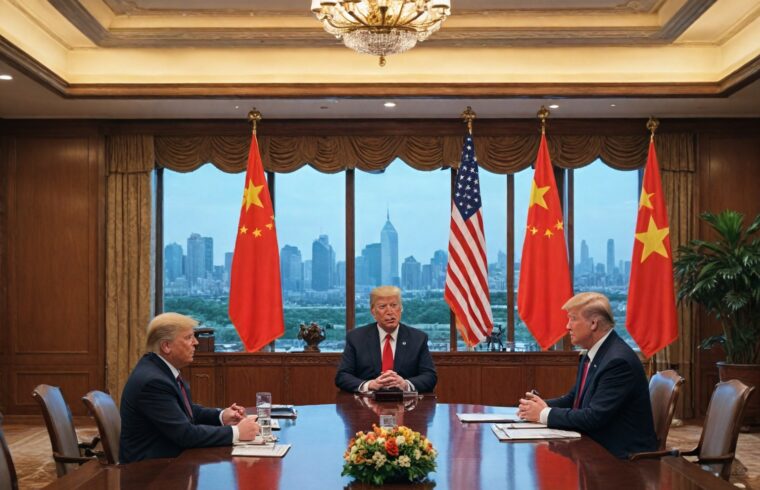
The upcoming summit between U.S. President Donald Trump and Chinese President Xi Jinping in Beijing is drawing significant global attention. This meeting holds the promise of reshaping U.S.-China relations while addressing pressing regional issues. Trade tensions, security affairs, and international diplomacy are on the table, as both leaders seek to foster cooperation and mitigate conflicts.
As the world watches closely, this summit is emblematic of the broader East Asia dynamics, revealing how influential countries are managing not only their bilateral ties but also their roles in global affairs. Ahead of the summit, U.S. and Chinese officials are engaging in pre-negotiations in Seoul, South Korea, highlighting the importance of collaboration in a rapidly evolving geopolitical landscape.
Diving Deeper into Trade Talks and Tensions
In the days leading up to the summit, U.S. Treasury Secretary Scott Bessent is set to meet with Japanese Prime Minister Sanae Takaichi, showcasing the interconnectedness of regional alliances amidst ongoing tensions regarding Iran and Taiwan. Tokyo, reliant on Middle Eastern oil, is particularly affected by the geopolitical dynamics at play. Bessent’s discussions will aim to strengthen trilateral ties, which have been strained by recent statements from Takaichi supporting Taiwan in the face of Beijing’s military threats.
Concurrently, Chinese Vice Premier He Lifeng will lead trade discussions in South Korea, emphasizing the importance of achieving actionable outcomes before Trump’s sit-down with Xi. Given unresolved trade issues and mutual concerns over the Iran crisis, experts predict this summit will focus more on risk management rather than establishing long-term cooperative strategies. The agenda reflects the urgent need to address immediate threats while laying groundwork for deeper engagement.
Implications of the Summit and Future Relations
As President Trump prepares for his visit, there is an air of cautious optimism regarding potential outcomes. The discussions are expected to yield commitments from China to increase imports of U.S. goods such as aircraft and agricultural products, yet analysts caution that significant barriers will persist, particularly over U.S. technology export controls. The summit’s conclusions could serve as a barometer for future relations and trade agreements.
In addition to trade, the strategic implications of discussions surrounding Iran and Taiwan will be pivotal. Heightened collaboration in addressing the Iranian situation could enhance China’s role as a mediator in the region, while also allowing both nations to strategically counteract escalating tensions. However, experts stress that the summit should be seen as a starting point for ongoing dialogue rather than an endpoint.
In conclusion, the forthcoming summit between Presidents Trump and Xi presents a critical opportunity for redefining U.S.-China relations amidst a backdrop of geopolitical strife. As both leaders prepare for discussions that could set the tone for future engagements, several questions emerge: How will the outcomes of this meeting influence global perceptions of U.S.-China ties? What measures will each side take to implement agreements reached? And can this summit truly pave the way for a more stable future in East Asia?
Editorial content by Avery Johnson