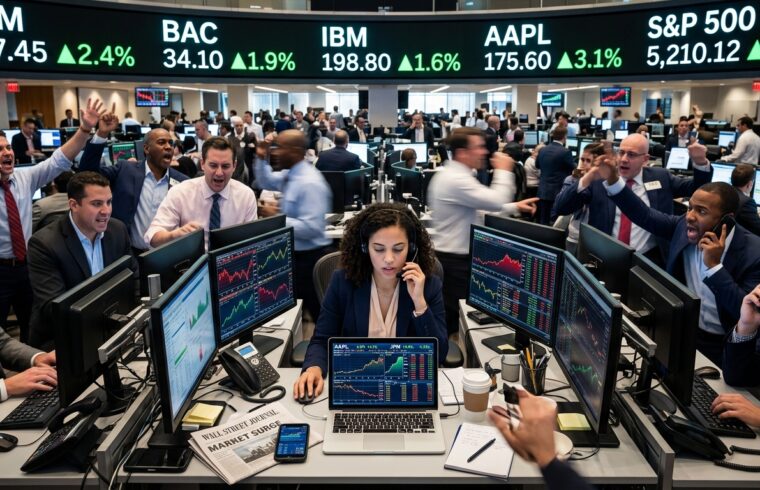
Highlights:
– Major banks such as JPMorgan Chase and Bank of America report quarterly earnings with mixed results.
– Apple and IBM face downgrades and sharp stock price drops following disappointing forecasts.
– Analysts question consumer spending trends that may impact tech companies moving forward.
Introduction to Financial Performance Trends
In the ever-evolving landscape of the financial markets, quarterly earnings reports provide crucial insights into the health and performance of various companies. Recently, several major entities, particularly in the banking and technology sectors, have released their Q2 earnings, shedding light on their operational successes and challenges. The significance of these reports extends beyond financial metrics; they can also signal trends affecting the economy and consumer behavior.
Understanding financial performances can impact investor sentiment and guide market movements. In this context, the latest earnings from renowned institutions like JPMorgan Chase and Bank of America, along with technology giants such as Apple and IBM, have sparked discussions about the future of these sectors amid changing economic conditions. These results not only reflect the companies’ internal performance but also hint at broader economic trends that could influence market stability.
Insights into Quarterly Earnings Reports
JPMorgan Chase reported earnings of $6.14 per share on a revenue of $58.02 billion, slightly above the market’s projected profit of $5.85 per share. However, uncertainties remain regarding how comparable these figures are to consensus expectations. In contrast, Bank of America posted a stronger-than-expected performance, achieving earnings of $1.21 per share and revenue of $31.7 billion, surpassing the analysts’ anticipations. Conversely, Wells Fargo’s reports revealed earnings of $2 per share, marking a decline in share price even after exceeding expectations in revenue.
The technology sector faced significant pressure, notably with Apple, which saw its shares fall about 1% following a downgrade from KeyBanc. This downgrade highlights concerns over consumer spending amid rising prices, which could lead to tightened budgets for customers. Apple’s consumer electronics products are particularly sensitive to shifts in discretionary spending, underlining vulnerabilities in its stock performance. Meanwhile, IBM’s share price plummeted as it reported underwhelming preliminary earnings, suggesting that investors are wary of its future prospects.
Implications and Future Considerations
The mixed quarterly results from these prominent companies may suggest a complex relationship between consumer confidence and corporate performance. On one hand, strong results from Bank of America could indicate resilience in banking, while declines at tech companies like Apple and IBM may signal caution among consumers and investors alike. Such discrepancies invite analysts to reassess the economic landscape, emphasizing the need for businesses to adapt to evolving consumer behaviors.
As companies navigate these challenging trends, they may consider implementing strategic measures to bolster their positions. For banks, this could mean focusing on cost management and exploring new revenue streams beyond traditional lending. For tech firms, innovating product offerings and refocusing marketing efforts may help mitigate the impact of consumer spending restraint. The outcomes of these strategies will be closely monitored as they could have far-reaching implications for the broader economy and stock market trajectory.
In conclusion, recent earnings reports from significant corporations in the banking and technology sectors underscore the delicate balance between company performance and consumer behavior. What does the mixed performance of major companies tell us about current economic conditions? How can businesses effectively respond to shifting consumer spending trends? And what might this mean for stock market dynamics in the months ahead?
Editorial content by Taylor Rodriguez